

· By Kelin Marquet
Can Vitamins Reverse Gray Hair?
There is absolutely nothing wrong with gray hair. Still, it is completely understandable to wonder whether taking vitamins could bring your hair back to its original color. Some ads circulating on social media suggest that supplements can reverse gray hair, but let’s look at the evidence and clear things up.
Reversing gray hair by taking vitamins alone is very unlikely and is not supported by strong scientific evidence. However, certain nutrient deficiencies have been linked to premature graying. There is also one situation where gray hair has actually been shown to reverse. Let’s break it all down.
What Causes Gray Hair?
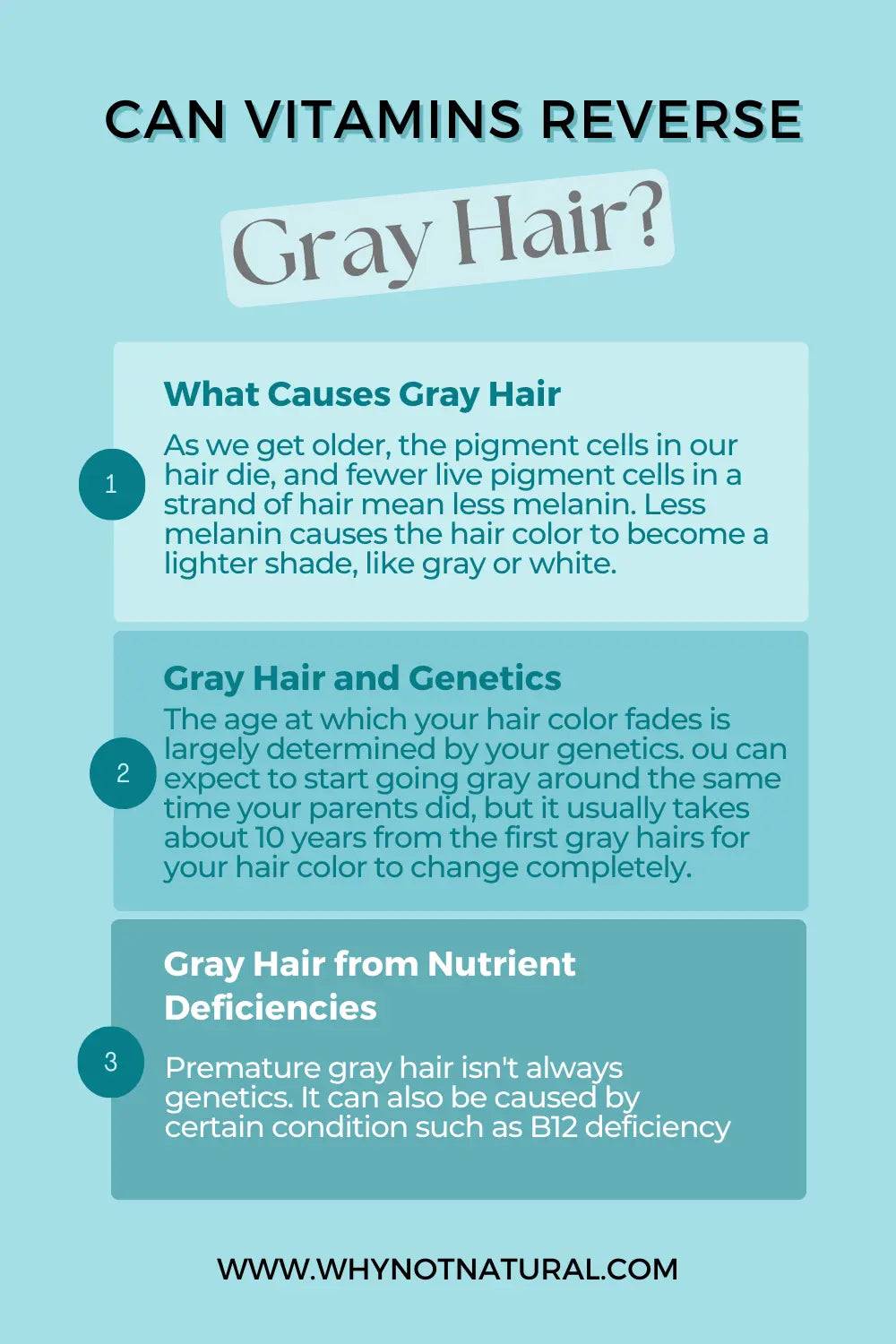
Nearly everyone goes gray eventually. As we age, the pigment-producing cells in our hair follicles gradually die. When fewer pigment cells are present, less melanin is produced. Lower melanin levels cause hair to lose its color and appear gray or white.
Gray Hair and Genetics
The age at which hair begins to turn gray is largely determined by genetics. Some people notice gray hairs very early in life, while most see their first grays in their 20s or 30s.
Premature hair graying is generally defined as going gray before age 20 in Caucasians and before age 30 in African Americans. In many cases, people begin graying around the same age as their parents. From the first gray hairs, it often takes about 10 years for hair color to change significantly overall.
Gray Hair and Nutrient Deficiencies
Genetics are not the only factor involved in premature gray hair. Certain nutrient deficiencies have been associated with early graying.
According to information referenced by Harvard Health, vitamin B12 deficiency may play a role in premature gray hair. In addition, a study in children with early graying found lower levels of serum ferritin, serum calcium, and vitamin D3 compared to children without gray hair (1). Correcting a vitamin D deficiency often helps support healthy calcium levels as well.

Vitamin D plays an important role in many aspects of health beyond hair pigmentation. If you are concerned about deficiency, it is best to have your levels checked and speak with a healthcare provider about appropriate next steps.
Another study observed that certain trace elements, including copper, iron, and calcium, may be lower in individuals with premature graying. However, the researchers emphasized that more studies are needed to better understand this relationship (2). Despite common internet claims, there is currently limited scientific evidence linking low copper levels directly to gray hair.
Can You Reverse Gray Hair?
So, can gray hair actually be reversed?
For a long time, gray hair was considered irreversible. However, a 2021 study from Columbia University found that reducing extreme stress was associated with hair re-pigmentation in some participants. This effect was not observed in participants over the age of 40 (3).
In one case, a participant experienced noticeable hair re-pigmentation during a vacation. This research highlights the significant role stress can play in how we age and how our bodies function, including changes in hair color.
Conclusion
In recent years, many people have experienced prolonged periods of high stress. As stress levels decrease for some, it is possible that reduced stress could explain reports of hair color returning.
This explanation is far more plausible than vitamins or supplements reversing gray hair on their own. While correcting nutrient deficiencies may help support overall health and could delay the onset of premature graying, supplements are unlikely to restore hair color once pigment cells are no longer active.
Supporting your body with balanced nutrition, stress management, and healthy lifestyle habits may help you age more in line with your genetic blueprint.
Don't forget to subscribe to our newsletter to learn which supplements to take, how to combine them for maximum benefit, and other health tips to boost your energy and vitality. Plus, discover natural strategies to reduce hormonal imbalances, stress, and anxiety. Click here to get started!
References
(1) https://www.ncbi.nlm.nih.gov/pmc/articles/PMC3746220/
(2) https://www.ncbi.nlm.nih.gov/pmc/articles/PMC6369637/
(3) https://elifesciences.org/articles/67437
Disclaimer
The statements in this article have not been evaluated by the Food and Drug Administration. The products mentioned are not intended to diagnose, treat, cure, or prevent any disease. Please check with a doctor before starting any new supplement and to ensure the advice in this article is right for you.